



One skincare forum insists that any flush or flare needs a strong acid routine to "fix" skin from within. Another voice claims soothing products only mask redness temporarily and never solve anything. A third camp treats a damaged barrier and visible redness as two separate problems needing two separate routines, leaving reactive skin owners juggling conflicting advice. A red reactive skin treatment built around testing rather than assumption offers a clearer way to sort fact from myth, and Skin Rocks' The Support Serum is a useful case study for doing exactly that.
Myth: All Redness Responds to the Same Treatment
Redness shows up for different reasons. Some skin flushes from heat or stress, some reacts to specific ingredients, and some carries a compromised barrier that makes irritation more visible. Treating all of it with one generic calming cream assumes a shared cause that rarely exists. Skin Rocks positions The Support Serum specifically for red, reactive skin rather than general dullness or dehydration, which is a narrower target than a catch-all soothing product.
That distinction matters because an effective red reactive skin treatment needs to address irritation and stress responses together, not just cover redness temporarily. The brand describes the serum as formulated with soothing extracts and tested across skin tones, which points to a formulation built around reactivity rather than one repurposed from a brightening or hydrating line.
Myth: Soothing Products Only Mask Symptoms, They Don't Fix the Problem
A common assumption holds that calming products just sit on top of skin, dulling the look of redness without changing anything underneath. That may be true of some formulas, but it is not a universal rule. Skin Rocks states that The Support Serum facilitates a long-term improvement in skin's stress responses, not only a short-term reduction in visible redness.
That two-part claim is worth separating out. The quick part is the redness reduction. The slower part concerns how skin responds to triggers over time, and a lasting result from a soothing formula is not automatically incompatible with fast visible change, provided the product does both jobs rather than one.
The Support Serum: How Clinical Testing Informs Actual Results
The Support Serum is described as clinically proven to significantly reduce redness in just 2 weeks. That is a specific, time-bound claim, not a vague promise of calmer-looking skin eventually. It is also stated to be clinically tested on all skin tones, which matters for any treatment addressing visible redness across varied complexions.
The format is a lightweight, milky serum, sized at 30ml for the full product, with a refill version also available at 30ml and a smaller 28ml option inside a gift set. A refill option points toward ongoing use rather than a one-off purchase, which fits the long-term claim made about skin's stress responses.
Myth: Red Skin Requires Aggressive Actives and Frequent Exfoliation
There is a persistent idea that visible improvement only comes from strong actives, frequent acid use, or heavy exfoliation. For reactive skin, that approach often backfires, since aggressive ingredients can increase the very irritation someone hopes to resolve. A red reactive skin treatment generally sits apart from exfoliating acids and high-strength retinoids for this reason.
The range at Skin Rocks separates these categories rather than blending them. The Support Serum sits within the calming, barrier-focused offering, distinct from products like The Control Acid or The Gentle Acid, which are positioned for exfoliation rather than redness management. Keeping these functions separate reflects a broader idea that reactive skin typically needs restraint before intensity.
Myth: Barrier Damage and Redness Are Separate Issues to Address Separately
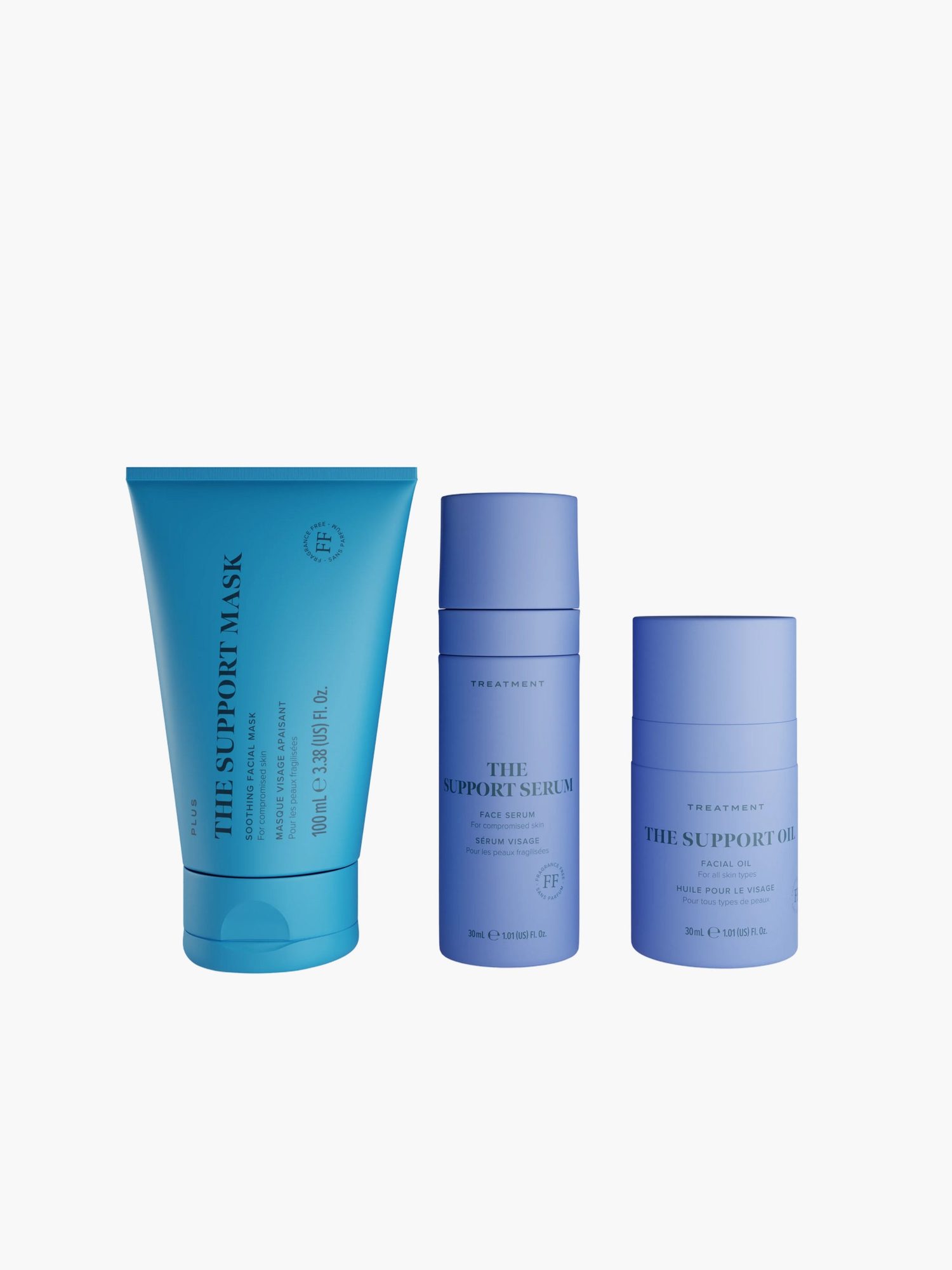
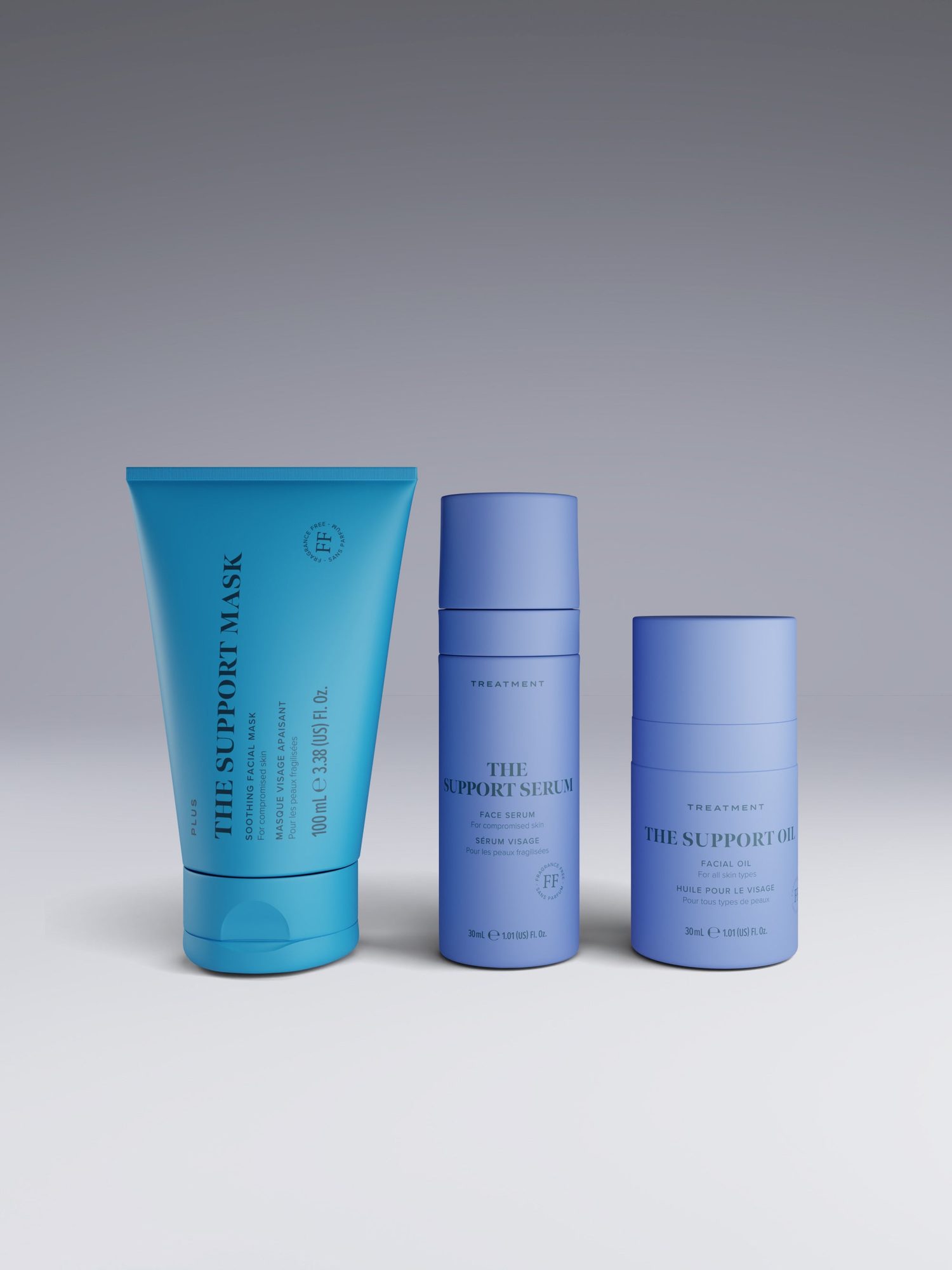
Another myth treats barrier repair and redness reduction as two unrelated goals needing two unrelated routines. One product description links sensitivity, redness, and a damaged skin barrier together explicitly, describing The Support Trio as a bundle curated for exactly that combination. This suggests the concerns overlap rather than sit in isolation.
The Support Trio brings together three products designed to work together, replenishing compromised skin while calming visible redness at the same time. That pairing of replenishment and calming, rather than one without the other, reflects a joined-up view of reactive skin rather than treating redness as purely cosmetic.
Building a Sustainable Routine Beyond Single-Product Solutions
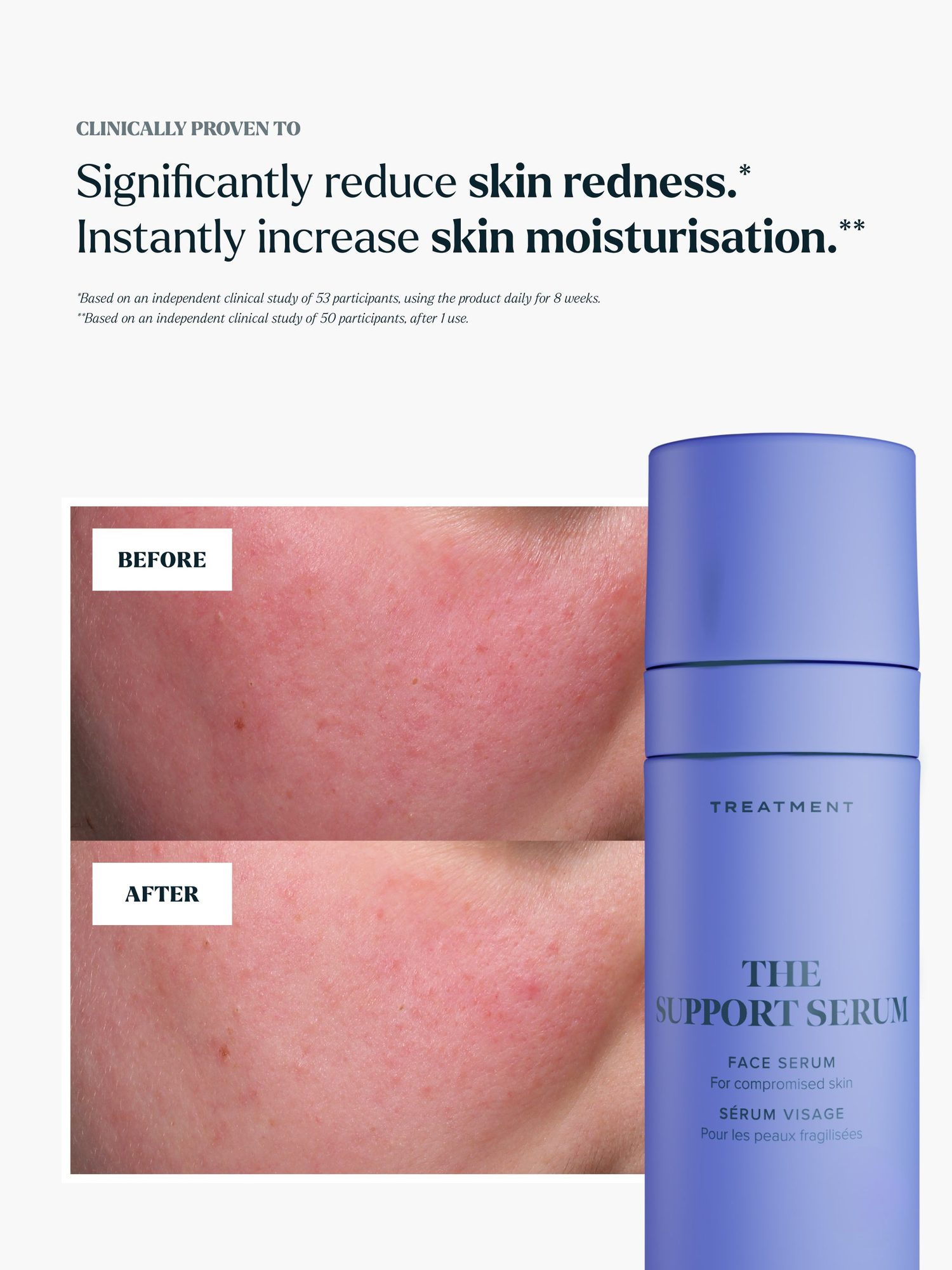
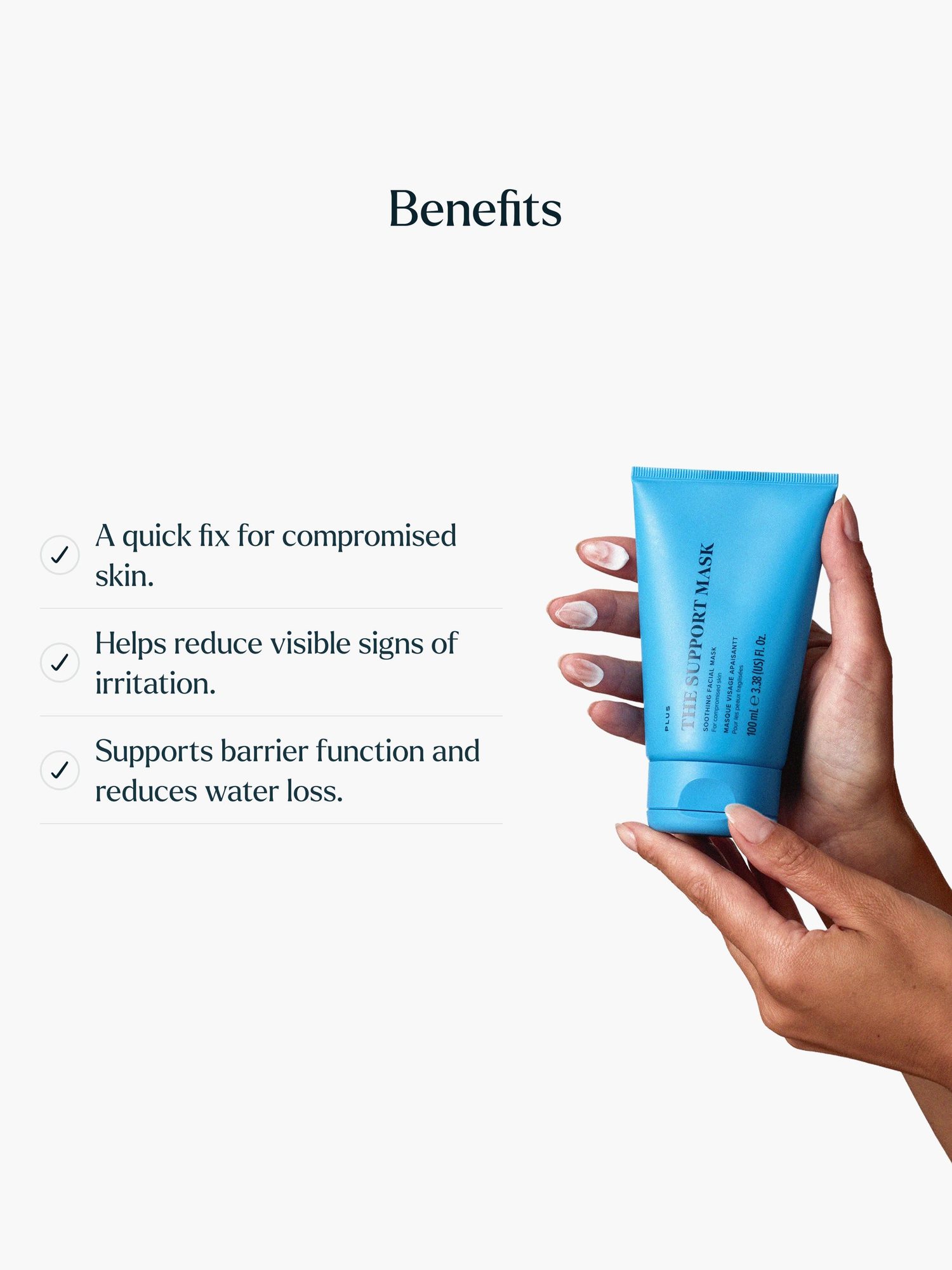
No single serum replaces a full routine. Alongside The Support Serum and The Support Trio, the wider range from Skin Rocks includes a Mini Support Serum for travel or introductory use and a Support Mask described as a soothing facial mask, both aimed at the same reactive-skin concern. A routine built around calming ingredients, consistent barrier support, and appropriate sun protection tends to serve reactive skin better than any isolated product.
- Overtreatment is common, where several actives are introduced at once instead of allowing skin time to adjust.
- Layering errors happen when acids or strong actives are applied directly before or after a soothing serum, cancelling out the calming effect.
- Ingredient misunderstandings lead some people to assume any product labelled soothing or calming works the same way, when formulations and intended concerns differ considerably.
- Expectations misalignment arises when a short-term cosmetic fix is expected from a formula designed to also improve skin's stress responses over a longer period.
Myths about red, reactive skin persist because redness looks like one problem even when it has several causes. Evidence-led formulation and realistic timelines matter more than any single miracle step.